

Become UKrAINIAN
SPEAK LIKE A REAL NATIVE
AUTHENTIC UKRAINIAN LIFESTYLE
From its roots in the ancient Kyivan Rus’ civilization to its central role as the breadbasket of Europe, Ukraine has been at the crossroads of Eastern and Western cultures for over a millennium. With influences from Byzantine Christianity, Mongol invasions, Polish-Lithuanian rule, and the Cossack Hetmanate, Ukraine’s history reflects a remarkable blend of resilience and cultural richness. Its vibrant traditions are deeply rooted in Slavic heritage, enriched by interactions with neighboring empires and cultures.
After gaining independence in 1991 following the dissolution of the Soviet Union, Ukraine embarked on a transformative journey. The cultural revival in Ukraine over recent decades has been remarkable. Kyiv, Lviv, and Odesa have become hubs for the arts, technology, and education, while Ukrainian cinema, literature, and music gain increasing international recognition. Today, Ukraine stands as a beacon of freedom and determination, a bridge between Eastern traditions and Western aspirations.
We have created a selection of words and expressions that you won't find in any textbook or course, to make you become a real native by helping you understand Ukrainian words that carry a deeper cultural meaning as well as expand your knowledge of the country and its history.
Speak and think like a real Ukrainian!

EXPAND YOUR KNOWLEDGE
If you are serious about learning Ukrainian, we recommend that you download the Complete Ukrainian Master Course.
You will receive all the information available on the website in a convenient portable digital format as well as additional contents: over 15.000 Vocabulary Words and Useful Phrases, in-depth explanations and exercises for all Grammar Rules, exclusive articles with Cultural Insights that you won't find in any other textbook so you can amaze your Ukrainian friends or business partners thanks to your knowledge of their country and history.
With a one-time purchase you will also get 10 hours of Podcasts to Practice your Ukrainian listening skills as well as Dialogues with Exercises to achieve your own Master Certificate.
Start speaking Ukrainian today!
BANDURA
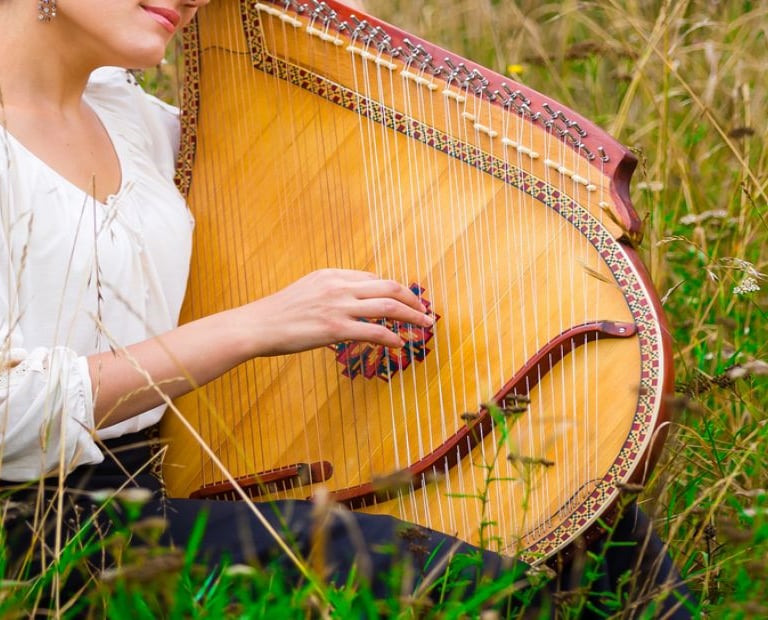
The Бандура (bandura, traditional Ukrainian string instrument) is one of the most emblematic symbols of Ukrainian cultural identity, blending the features of the lute and zither. It has a wooden body with numerous strings, typically between 55 and 68, and produces a resonant, harp-like sound that defines much of Ukraine’s folk and national music. Historically, it was associated with Кобзарі (kobzari, itinerant Ukrainian minstrels), blind or sight-impaired musicians who travelled from village to village singing Думи (dumy, epic songs) about heroic deeds, Cossack battles, and spiritual endurance. The Бандура became more than a musical instrument; it served as a voice of history and collective memory.
The origins of the instrument trace back to the 16th century, evolving from earlier string instruments such as the Гуслі (husli, ancient Ukrainian harp) and Кобза (kobza, plucked string instrument). During the period of the Гетьманщина (Hetmanshchyna, Cossack statehood), the instrument gained widespread recognition in the courts of Cossack leaders and among the peasantry. By the 19th century, the Бандура had become a national symbol of resistance and identity during times of foreign domination. It was played during gatherings, festivals, and rituals such as Купала (Kupala, midsummer folk festival), strengthening its link to communal life.
In the Soviet period, the Бандура faced suppression due to its association with Ukrainian nationalism and the memory of the УПА (UPA, Ukrainian Insurgent Army). Many performers were persecuted or exiled, and their instruments destroyed. However, the tradition survived in diaspora communities, particularly in Canada and the United States, where Ukrainian emigrants continued to play and teach the instrument in cultural associations. The revival of Бандура ensembles in Ukraine after independence marked a cultural renaissance, with conservatories and music schools reintroducing it into academic study.
Modern Бандуристи (bandurysty, bandura players) continue to preserve and innovate the art. They perform both traditional folk melodies and contemporary compositions, ensuring the instrument remains relevant. Today, the Національна капела бандуристів України (National Bandura Capella of Ukraine) represents one of the most prestigious ensembles, showcasing the versatility and emotional depth of the Бандура. Its repertoire includes ancient Думи, patriotic songs, and orchestral adaptations, emphasizing the fusion of old and new.
The instrument’s craftsmanship is also a point of national pride. Artisans from regions like Kharkiv and Poltava produce instruments with intricate carvings and decorations that reflect Ukrainian ornamentation traditions.
BATURYN
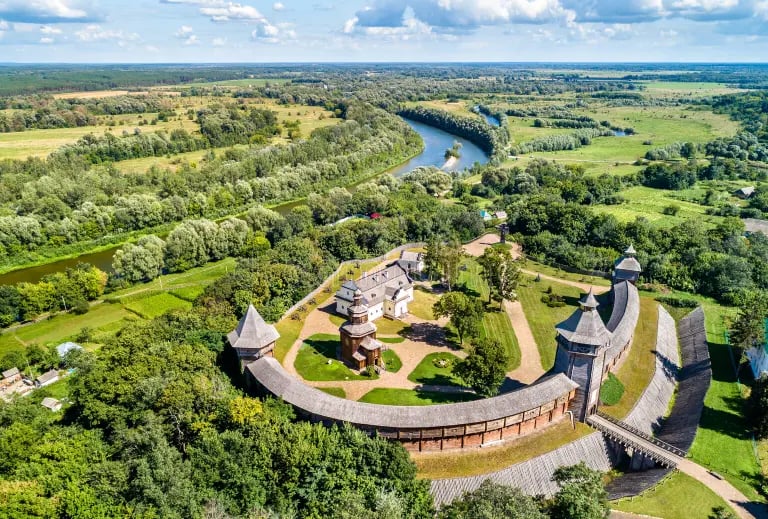
The Батурин (Baturyn, historical Cossack capital) holds a central place in Ukrainian history as a symbol of both national resilience and tragic loss. Situated on the banks of the Сейм (Seim, river in northern Ukraine), it was one of the major political and cultural centers of the Гетьманщина (Hetmanshchyna, Cossack statehood) during the 17th and early 18th centuries. Founded as a fortress town in the early 1600s, Батурин became the residence of several hetmans, including Іван Мазепа (Ivan Mazepa, Ukrainian Cossack leader), whose rule marked a high point in Cossack autonomy. Under his leadership, the town developed into a fortified administrative hub with stone walls, churches, and the Гетьманський палац (Hetman’s palace), reflecting both political ambition and architectural sophistication.
The tragedy that defines Батурин occurred in 1708 during the Велика Північна війна (Great Northern War). After Hetman Mazepa allied with Sweden against Russia, Tsar Peter I ordered the destruction of the city as punishment. Russian troops led by Меншиков (Menshikov, Russian general) captured and razed Батурин, massacring thousands of its inhabitants. The Батуринська різанина (Baturyn massacre) became a defining episode of national trauma, remembered in Ukrainian collective memory as a symbol of resistance and the struggle for independence. The devastation effectively ended the autonomous Cossack Hetmanate, ushering in tighter Russian imperial control over Ukraine.
In later centuries, Батурин retained its significance as a historical and archaeological site. Excavations revealed fortifications, weaponry, ceramics, and the remains of wooden structures that confirmed the city’s former grandeur. The Цитадель Батурина (Baturyn citadel) and Воскресенська церква (Resurrection Church) have been reconstructed, serving as memorials to those who perished in 1708. Since Ukrainian independence, Батурин has been restored as a national historical and cultural reserve, attracting scholars, tourists, and patriots seeking to connect with the past.
Modern Ukraine regards Батурин as a place of pilgrimage and remembrance. It hosts annual commemorative events dedicated to Мазепа and the victims of the massacre, blending historical education with cultural renewal. The reconstruction projects initiated in the early 2000s under the Національний заповідник “Гетьманська столиця” (National Reserve “Hetman’s Capital”) restored not only physical monuments but also a sense of continuity in national consciousness.


BORSCHT
The Борщ (borscht, beet-based soup symbolizing Ukrainian cuisine) is one of the most recognizable culinary symbols of Ukraine, embodying both national identity and regional diversity. Made primarily from буряк (beetroot), Борщ combines vegetables such as капуста (cabbage), картопля (potatoes), морква (carrots), цибуля (onions), and томат (tomato), creating a rich, red-colored soup with a distinctive sweet-and-sour flavor. It is typically served with сметана (sour cream) and часник (garlic), accompanied by slices of чорний хліб (black bread). Beyond its taste, Борщ carries deep cultural meaning, representing family unity, hospitality, and the agricultural wealth of Ukrainian soil.
The origins of Борщ trace back to ancient rural traditions when households relied on locally grown ingredients and preserved foods to survive harsh winters. In early forms, the soup was made from wild plants such as борщівник (hogweed), from which its name derives. Over centuries, it evolved into a complex dish with multiple regional variants. In Київщина (Kyiv region), Борщ is typically light and aromatic, while in Галичина (Halychyna, western Ukraine), it is thicker, sometimes enriched with ковбаса (sausage) or сало (cured pork fat). In southern Ukraine, cooks often add квасоля (beans) or риба (fish), demonstrating the adaptability of the dish to local resources.
During the Soviet period, Борщ became widespread across Eastern Europe, yet Ukrainians continued to regard it as a marker of national distinctiveness. It was traditionally prepared for both everyday meals and festive occasions such as Різдво (Christmas) and Великдень (Easter). In rural households, preparing Борщ was often a communal activity involving several generations, symbolizing cooperation and continuity. The dish also played a role in family rituals, with mothers teaching daughters their own recipe variations, preserving culinary heritage through oral transmission.
In recent years, Ukraine has emphasized Борщ as an element of intangible cultural heritage. In 2022, UNESCO inscribed “Culture of Ukrainian Borscht Cooking” on its List of Intangible Cultural Heritage in Need of Urgent Safeguarding, recognizing its cultural significance amid geopolitical challenges. This acknowledgment reinforced Борщ as a symbol of resilience and national pride, especially as Ukrainians around the world continue to cook it as a gesture of solidarity and remembrance.
Modern Ukrainian chefs reinterpret Борщ in contemporary gastronomy, offering vegetarian, smoked, or deconstructed versions while respecting traditional foundations. Restaurants in Kyiv, Lviv, and Odesa showcase it as a national emblem, often highlighting regional origins.
BROVARY
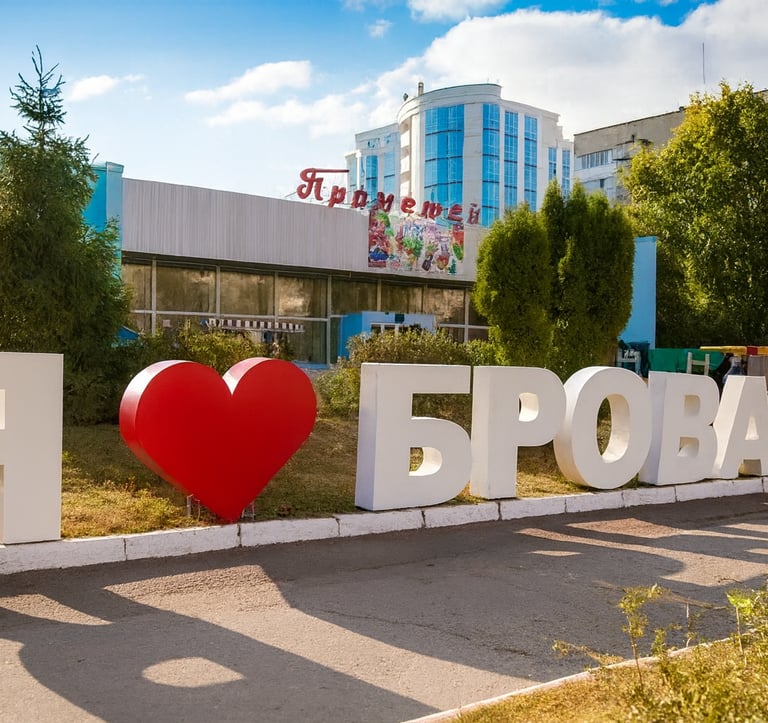
The Бровари (brovary, breweries producing traditional Ukrainian beer styles) represent an integral part of Ukraine’s gastronomic and social heritage. The term itself derives from the old Ukrainian word for “brewery” and also names several settlements, most notably the city of Бровари near Kyiv, historically known for its beer production. Brewing in Ukraine dates back to the times of Київська Русь (Kyivan Rus), when monks and craftsmen began producing beer for local consumption and religious festivities. Over centuries, the art of brewing evolved alongside agricultural development, especially the cultivation of ячмінь (barley) and хміль (hops), which became key ingredients in Ukrainian beer traditions.
In the 18th and 19th centuries, local Бровари emerged as vital enterprises in both towns and monasteries. Monastic breweries produced beer for internal use and trade, often following specific recipes that blended European influences with regional preferences. Ukrainian пиво (beer) was known for its mild flavor, natural carbonation, and absence of artificial additives. Peasant communities brewed their own variants, called домашнє пиво (home beer), which were typically unfiltered and fermented in wooden barrels. The craft had both economic and social functions, as beer was served during весілля (weddings), свята (festivals), and communal gatherings.
By the late 19th century, industrialization transformed the traditional Бровар (brewery) into a modern enterprise. Cities such as Lviv, Kharkiv, and Kyiv became centers of large-scale production. The Львівська пивоварня (Lviv Brewery), founded in 1715, is considered the oldest continuously operating brewery in Ukraine. During the Soviet period, brewing was nationalized, and standardized beer types like Жигулівське (Zhiguli beer) became popular across the republics. However, local breweries retained regional recipes, preserving the distinct Ukrainian brewing identity despite centralization.
In contemporary Ukraine, the brewing industry has experienced a significant revival. Craft beer production has expanded rapidly since the 2010s, with microbreweries emerging in cities and towns across the country. Modern Бровари experiment with traditional grains and local ingredients such as мед (honey), чорна смородина (black currant), and вишня (cherry), giving rise to unique Ukrainian craft beer varieties. Beer festivals, like those held in Lviv and Kyiv, celebrate this renewal, connecting historical practices with modern tastes. The city of Бровари itself continues to honor its brewing heritage through local production and cultural events.
BRYNZA
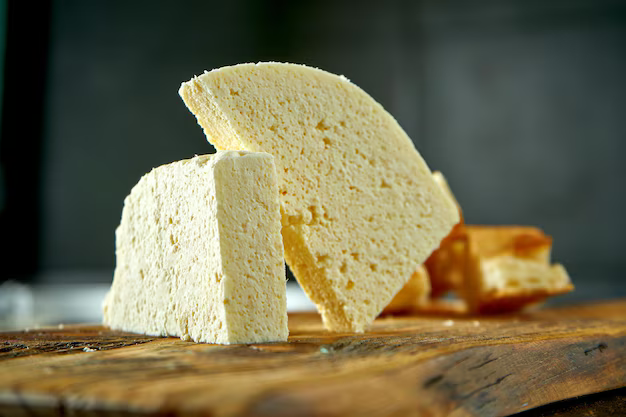
The Бринза (brynza, sheep cheese common in Ukrainian culinary heritage) is a traditional white cheese made from sheep’s milk and is one of the oldest dairy products in Ukraine. Closely associated with the Carpathian highlands, it is produced mainly in regions such as Закарпаття (Transcarpathia), Гуцульщина (Hutsul region), and Буковина (Bukovyna), where pastoralism has shaped local economies and food traditions for centuries. The process of making Бринза involves curdling fresh milk with natural rennet, pressing the curds, and salting the cheese to preserve it. Its crumbly texture and tangy flavor distinguish it from other cheeses, and it is widely used in Ukrainian rural cuisine, reflecting the close bond between the people and their mountainous environment.
Historically, Бринза served as a key component of the diet for shepherds, or вівчарі (shepherds), who grazed flocks in the Carpathians during the summer months. In the полонина (mountain pasture) huts, milk was processed daily using wooden tools and clay vessels. The cheese would then be stored in barrels or skins for transport down to the valleys, where it was sold or exchanged for grain. This seasonal production cycle remains a living tradition in the Carpathians, representing one of the few remaining examples of pre-industrial cheese-making in Europe.
In Ukrainian cuisine, Бринза is valued both as an ingredient and as a standalone delicacy. It is often grated over вареники (dumplings), банош (cornmeal porridge), or деруни (potato pancakes). In the Hutsul region, Бринза accompanies nearly every festive meal, symbolizing hospitality and simplicity. It also plays a role in ritual events: during Різдво (Christmas) and Великдень (Easter), it may be served as part of the traditional holiday table. The cheese’s preservation through salt made it indispensable in regions with long winters, contributing to nutritional balance in rural diets.
Under Soviet rule, the production of Бринза was industrialized, and factories began standardizing its texture and flavor. Nevertheless, authentic Carpathian Бринза remained highly prized for its handmade quality and natural taste. In 2013, Гуцульська бринза (Hutsul brynza) became the first Ukrainian product to receive Protected Geographical Indication (PGI) status under national legislation, affirming its cultural and geographic specificity.
Today, artisanal Бринза production has become a symbol of Ukraine’s sustainable rural development and cultural heritage preservation. Local producers participate in cheese festivals such as Свято Бринзи (Festival of Brynza) in Rakhiv, celebrating traditional craftsmanship and mountain identity.
CHORNOBYL
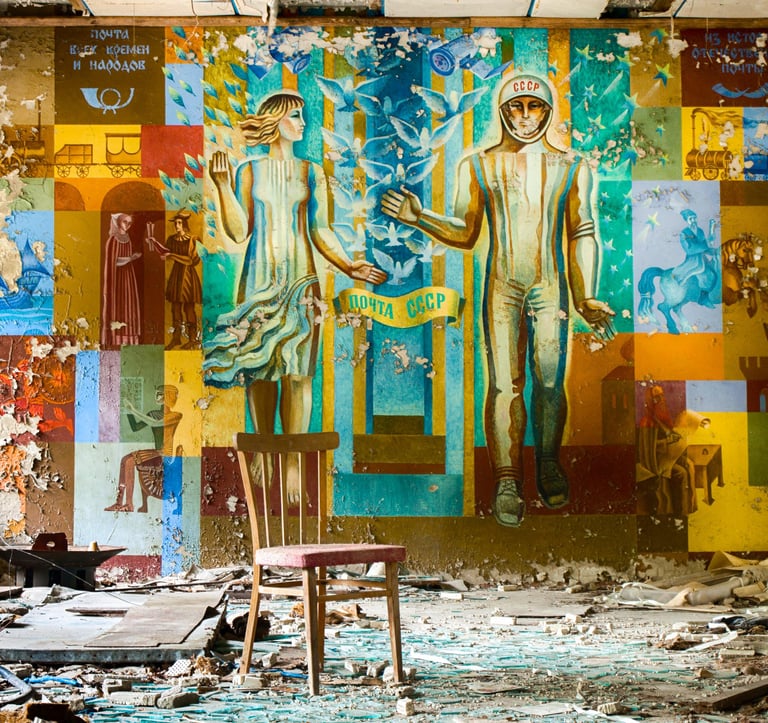
The Чорнобиль (Chornobyl, nuclear disaster site shaping modern Ukrainian history) represents one of the most significant and tragic events of the twentieth century. Located in northern Ukraine, near the border with Belarus, the town of Чорнобиль and its surrounding Прип’ять (Prypiat, nearby city built for plant workers) became globally known after the catastrophic explosion at the Чорнобильська атомна електростанція (Chornobyl Nuclear Power Plant) on April 26, 1986. The disaster, caused by a reactor explosion during a safety test at Reactor No. 4, released massive quantities of radioactive materials into the atmosphere, affecting millions of people and large territories across Ukraine, Belarus, and Europe.
The Чорнобильська катастрофа (Chornobyl catastrophe) marked a turning point in both Ukrainian and world history. The immediate response involved the evacuation of tens of thousands of residents, including the entire population of Прип’ять, within 36 hours of the explosion. Soviet authorities initially concealed the extent of the accident, delaying international acknowledgment. Thousands of ліквідатори (liquidators, cleanup workers)—firefighters, soldiers, and engineers—were sent to contain the damage, often without adequate protection. Their heroism, despite exposure to lethal radiation, remains one of the most respected chapters in modern Ukrainian history.
Environmentally, the consequences of Чорнобиль were devastating. Large areas of northern Ukraine were declared part of the Зона відчуження (Exclusion Zone), a 30-kilometer radius around the plant that remains largely uninhabited. Radioactive contamination affected soil, water, and forests, with long-term consequences for health and agriculture. Despite these dangers, some elderly residents, known as самосели (self-settlers), returned to live in their ancestral villages, maintaining traditional lifestyles under restricted conditions. The zone also became an unintentional wildlife sanctuary, where animals such as wolves, wild horses, and elk thrive in the absence of human activity.
Politically, Чорнобиль played a key role in awakening Ukrainian civic consciousness. The disaster exposed the inefficiency and secrecy of the Soviet system, fueling discontent that contributed to the eventual collapse of the USSR. After Ukraine’s independence in 1991, Чорнобиль became a symbol of both tragedy and rebirth. The construction of the Новий безпечний конфайнмент (New Safe Confinement)—a massive steel structure completed in 2016—was a landmark in international cooperation, designed to contain remaining radioactive materials and secure the site for decades. Today, Чорнобиль serves as both a memorial and a research site. Scientists study radiation’s effects on ecosystems while visitors can engage in guided tours.
CHUPRYNA
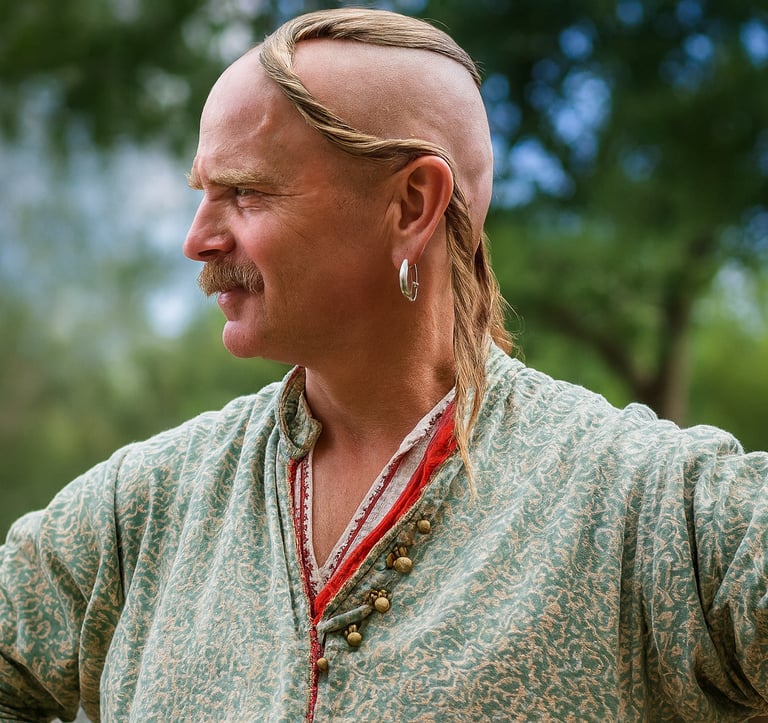
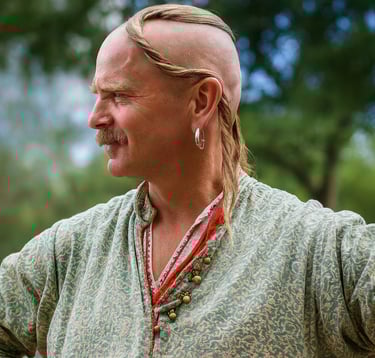
The Чуприна (chupryna, traditional Cossack hairstyle with a forelock) is one of the most distinctive symbols of Ukrainian Cossack culture and national identity. This hairstyle, featuring a cleanly shaven head with a single long lock of hair left on top or at the front, became emblematic of the Козак (Cossack, free warrior of the Ukrainian steppes). The Чуприна not only expressed personal bravery and independence but also carried spiritual and cultural meanings. It was a visible mark of belonging to the Запорозька Січ (Zaporozhian Sich, Cossack stronghold institution), where individual courage, honor, and loyalty to the homeland were paramount virtues.
Historically, the Чуприна emerged during the 16th and 17th centuries, a period when the Cossack communities along the Дніпро (Dnipro River) were consolidating into powerful military and political formations. The hairstyle distinguished the Козаки (Cossacks, plural) from surrounding populations, serving both as a social marker and a declaration of defiance against foreign domination. Foreign chroniclers and travelers, such as Guillaume Le Vasseur de Beauplan, often described Ukrainian warriors with admiration for their striking appearance—shaved heads, mustaches, and a Чуприна fluttering in the wind. This image became central to the visual iconography of Ukrainian heroism.
The Чуприна held symbolic and even sacred connotations. It was believed that the lock of hair connected the warrior to divine protection, allowing Бог (God) to pull his soul to heaven if he died honorably in battle. Cutting off a man’s Чуприна was thus considered a deep humiliation, equated with stripping him of his freedom and dignity. Young men who aspired to become full members of the Січ (Sich) would adopt the hairstyle during initiation ceremonies, marking their transformation into defenders of the land and faith.
During the 18th and 19th centuries, as the Cossack order declined and imperial control expanded, the Чуприна gradually disappeared from everyday life. Nevertheless, it remained a potent symbol in art, literature, and folklore. Painters such as Ілля Рєпін (Ilya Repin) immortalized it in works like “The Zaporozhian Cossacks Write a Letter to the Turkish Sultan,” while poets and historians used it to evoke national pride. The figure of the Козак із чуприною (Cossack with a chupryna) became a recurring motif in Ukrainian mythology—bold, independent, and loyal to his homeland.
In modern Ukraine, the Чуприна has undergone a revival as a patriotic emblem. It appears in reenactments, films, and even among some soldiers in the Збройні Сили України (Armed Forces of Ukraine), symbolizing continuity with the ancestral spirit of resistance.
HETMANSCHYNA
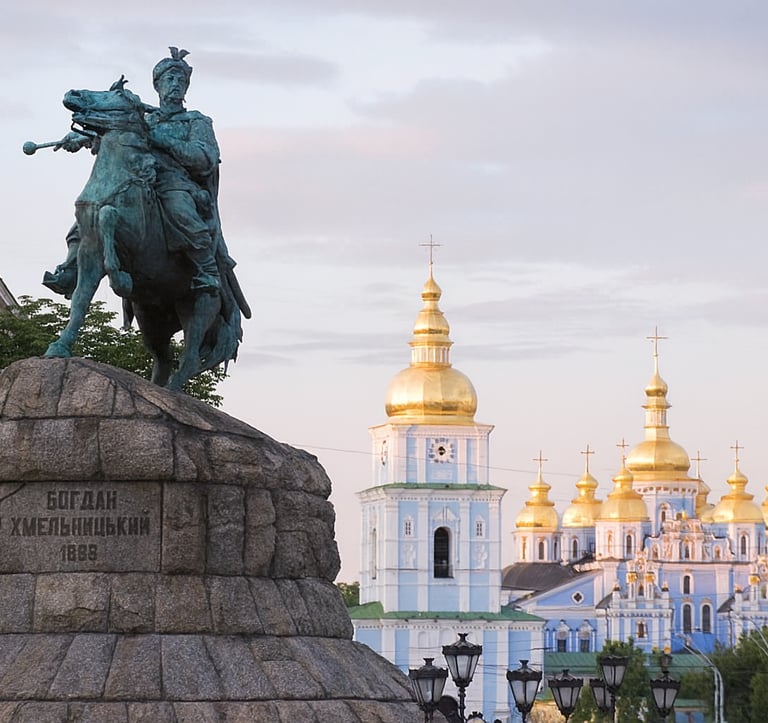
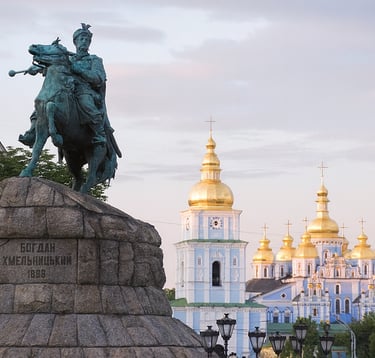
The Гетьманщина (Hetmanshchyna, historical period of Cossack statehood) represents one of the most formative eras in Ukrainian history, spanning from the mid-17th to the late 18th century. It refers to the autonomous Cossack polity that emerged after the Національно-визвольна війна (National Liberation War) led by Богдан Хмельницький (Bohdan Khmelnytsky) against Polish domination in 1648. The Гетьманщина was not only a military and political entity but also the first stable form of Ukrainian self-government, characterized by its own administrative system, army, and cultural life centered around the гетьман (hetman, elected Cossack leader).
The Гетьманщина extended over much of central and eastern Ukraine, with its capital at various times in Чигирин, Батурин, and later Глухів (Chyhyryn, Baturyn, Hlukhiv). Its structure was based on Cossack democratic traditions. The Генеральна рада (General Council)—an assembly of senior officers and Cossack representatives—elected the hetman, who served as both military commander and head of state. Administrative power was organized through полки (regiments) and сотні (companies), blending military hierarchy with civil governance. This model provided remarkable stability and a sense of participation among the Cossack population.
Culturally, the Гетьманщина experienced a renaissance in education, religion, and literature. The Києво-Могилянська академія (Kyiv-Mohyla Academy) flourished as an intellectual hub, training clergy, diplomats, and scholars who spread ideas of enlightenment and national consciousness. Churches and monasteries in the бароко (Baroque) style—particularly in Kyiv and Chernihiv—became architectural symbols of the era’s prosperity and faith. Ukrainian chronicles, or літописи, such as those of Самійло Величко (Samiylo Velychko), recorded political events and reinforced the concept of a distinct Ukrainian history separate from neighboring powers.
Politically, the Гетьманщина was characterized by constant negotiation between autonomy and foreign influence. The 1654 Переяславська угода (Pereyaslav Agreement) aligned Ukraine with Muscovy for protection but gradually led to increasing Russian domination. Successive hetmans like Іван Виговський (Ivan Vyhovsky) and Іван Мазепа (Ivan Mazepa) sought to restore independence through shifting alliances with Poland and Sweden. The brutal destruction of Батурин in 1708 and the suppression of Cossack freedoms after the Полтавська битва (Battle of Poltava) in 1709 marked the decline of true autonomy.
By the late 18th century, Catherine II of Russia formally abolished the Гетьманщина, integrating its territories into the imperial administrative system. Yet the ideals of self-rule, dignity, and community governance persisted in Ukrainian political culture. The memory of the Гетьманщина inspired 19th-century national revivalists and continues to shape the modern understanding of Ukrainian statehood.
HOLODOMOR
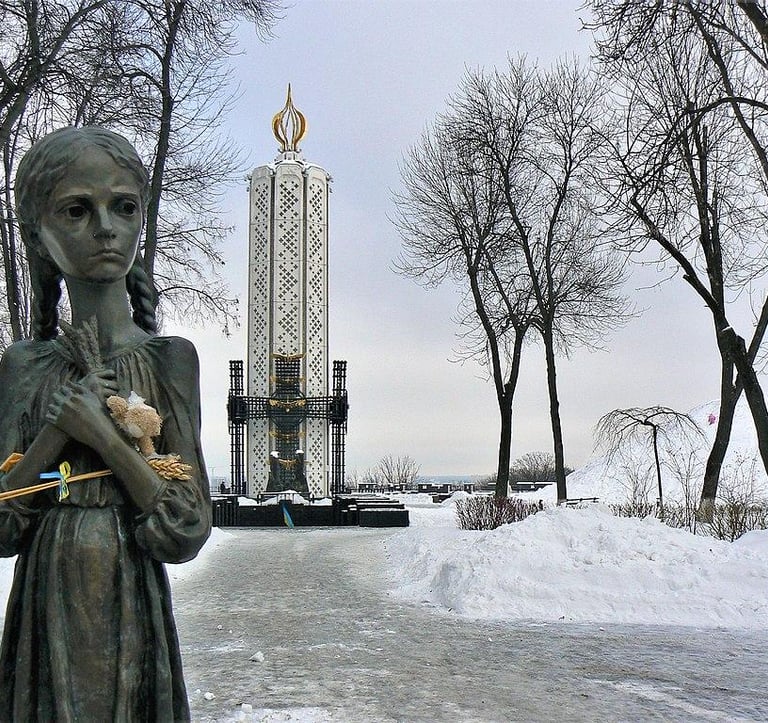
The Голодомор (Holodomor, recognition of famine genocide in Ukraine) stands as one of the darkest and most tragic chapters in Ukrainian history. The term, derived from голод (holod, hunger) and мор (mor, plague or death), refers to the man-made famine that ravaged Soviet Ukraine from 1932 to 1933, killing millions of people. Caused by the forced collectivization policies of Joseph Stalin’s regime, the Голодомор was not merely an agricultural failure but a deliberate act of political repression aimed at breaking Ukrainian resistance to Soviet control. It profoundly reshaped the country’s demography, culture, and collective memory, leaving a scar that endures to this day.
During the early 1930s, the Soviet government implemented колективізація (collectivization), merging individual farms into collective ones called колгоспи (kolhospy, collective farms). Ukrainian peasants, many of whom had strong traditions of private landownership dating back to the Гетьманщина (Hetmanshchyna), resisted these measures. In response, the authorities imposed brutal grain requisitions that stripped villages of food supplies. Armed brigades known as заготівельники (procurement agents) confiscated crops, livestock, and even household seeds. By late 1932, entire regions such as Полтавщина, Київщина, and Харківщина (Poltava, Kyiv, and Kharkiv regions) faced starvation.
The Soviet regime sealed the borders of Ukraine, preventing peasants from fleeing in search of food. Contemporary reports describe horrifying scenes of rural depopulation—villages emptied, fields untended, and countless lives lost. The death toll is estimated between 3 and 7 million, though exact numbers remain contested. In addition to physical destruction, the Голодомор sought to annihilate Ukrainian national consciousness. The government targeted cultural elites, closing Ukrainian-language schools and arresting members of the Інтелігенція (intelligentsia), including writers, clergy, and community leaders. The famine thus became both a weapon of starvation and a tool of cultural erasure.
Despite official censorship, memories of the Голодомор persisted through oral testimony and diaspora documentation. After Ukraine gained independence in 1991, research archives were opened, enabling historians to establish the famine’s deliberate nature. In 2006, the Верховна Рада України (Verkhovna Rada of Ukraine, Ukrainian Parliament) officially recognized the Голодомор as genocide against the Ukrainian people. Today, over thirty countries and numerous international organizations have followed suit, acknowledging it as a crime against humanity.
Commemoration plays a vital role in modern Ukraine’s remembrance culture. The Національний музей Голодомору-геноциду (National Museum of the Holodomor-Genocide) in Kyiv serves as both an educational and memorial space. Every November, Ukrainians observe the День пам’яті жертв Голодомору (Holodomor Remembrance Day), lighting candles in windows to honor the victims.
HOPAK
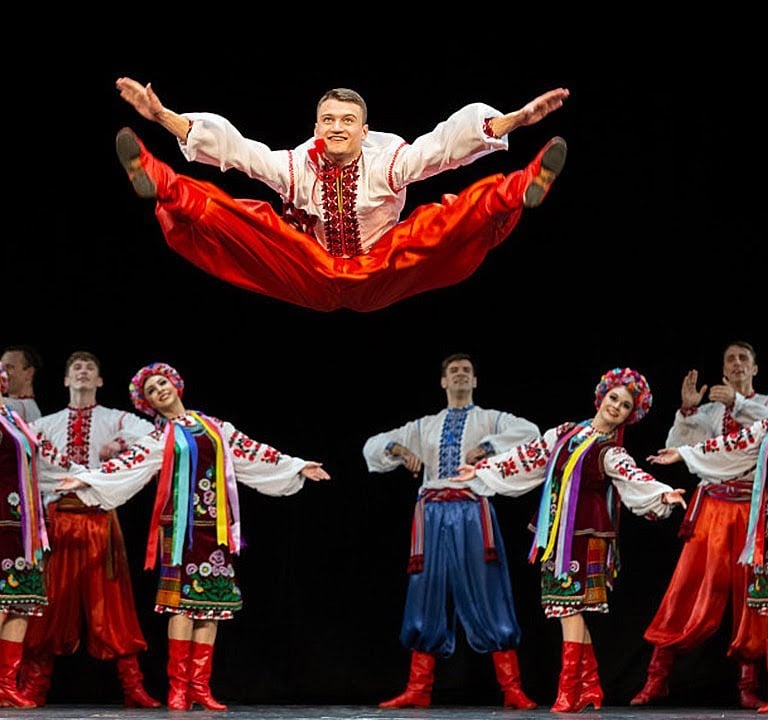
The Гопак (Hopak, energetic Ukrainian national dance) is the most iconic and vigorous dance form in Ukrainian culture, symbolizing freedom, valor, and joy. Its origins trace back to the 16th century among the козаки (kozaky, Cossacks) of the Запорозька Січ (Zaporizhian Sich, Cossack stronghold), where it emerged as a spontaneous celebratory dance after military victories. The word гопак derives from the exclamation “гоп!” (hop!)—a shout used by dancers to emphasize jumps, kicks, and spins. Over time, the Гопак evolved from an informal warrior’s performance into a structured stage art, becoming a national symbol of strength and identity both within Ukraine and abroad.
Initially, the Гопак was performed exclusively by men who improvised acrobatic movements displaying physical prowess and combat readiness. Dancers mimicked martial actions such as удари шаблею (sword strikes), присідання (squats), and стрибайки (leaps), turning the dance into a form of symbolic battle. As the tradition developed, women began to participate, introducing grace and narrative elements. Each regional version carried distinctive rhythms and gestures: the Полтавський гопак (Poltava hopak) emphasized agility, while the Київський гопак (Kyiv hopak) featured larger group formations and faster tempos.
Musically, the Гопак draws upon folk melodies played on traditional instruments such as the бандура (bandura), сопілка (sopilka, wooden flute), and цимбали (tsymbaly, hammered dulcimer). The tempo often accelerates gradually, challenging dancers to match the rhythm with increasing intensity. Folk ensembles preserved these musical patterns through centuries, ensuring continuity of style and form. The Гопак became a vital component of festive gatherings, weddings, and national celebrations, embodying the communal spirit and resilience of the Ukrainian people.
During the 19th and early 20th centuries, the Гопак transitioned from folk culture to professional choreography. Artists such as Василь Верховинець (Vasyl Verkhovynets) documented and systematized its steps, helping to establish it within academic dance institutions. In the Soviet era, choreographers like Павло Вірський (Pavlo Virsky) elevated the Гопак to international acclaim through large-scale performances by the Національний ансамбль танцю України (National Dance Ensemble of Ukraine). His stylized version combined authentic folk movements with theatrical precision, turning the Гопак into a celebrated expression of national artistry on global stages.
Today, the Гопак continues to thrive as both a folk and professional dance. It is performed by children, students, and national ensembles, serving as a tool of cultural education and patriotism. Variants such as бойовий гопак (combat hopak) even reinterpret the dance as a martial art discipline, blending choreography with self-defense techniques.
KOLYADKY
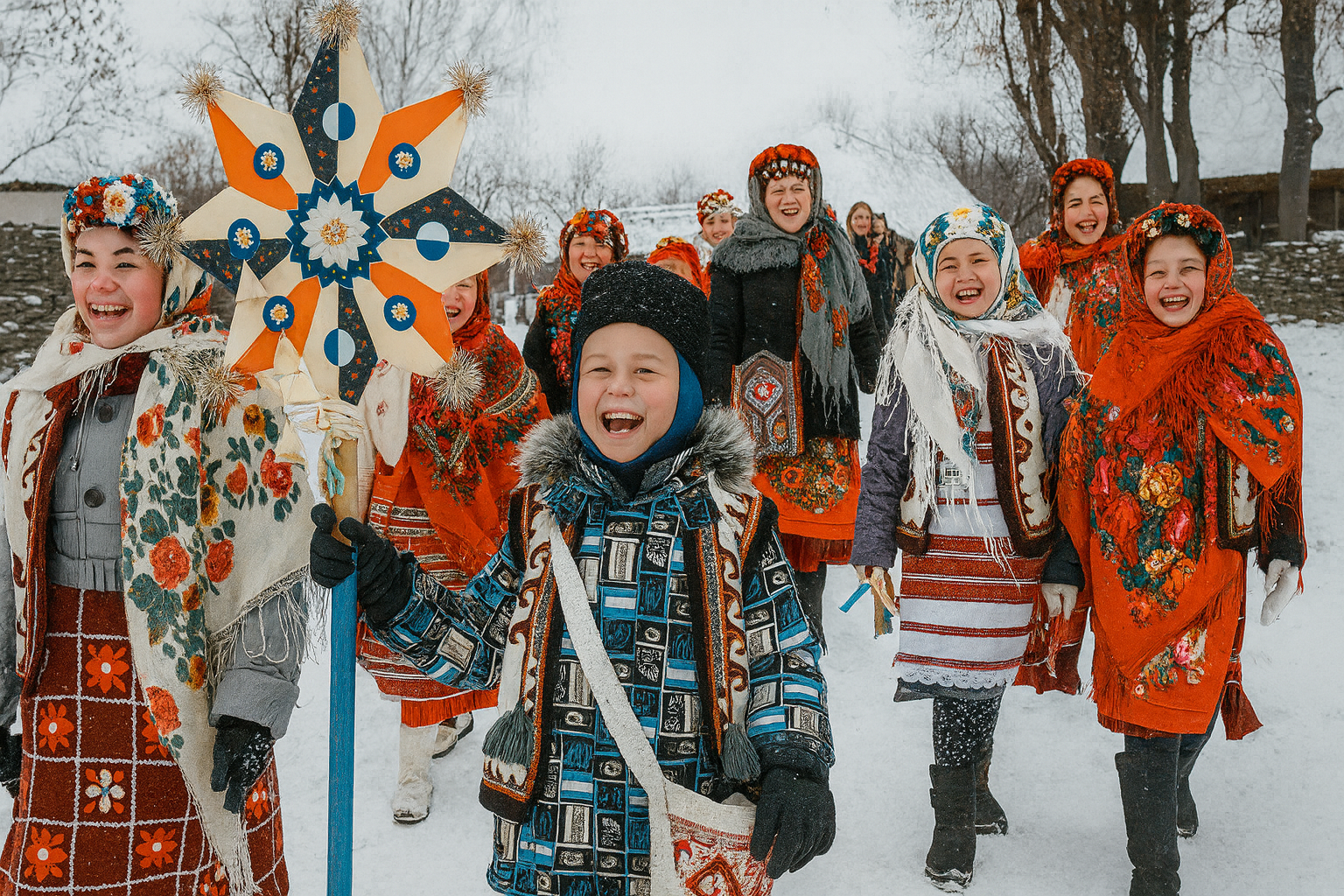
The Коля́дки (kolyadky, Ukrainian Christmas songs) form one of the most enduring and joyful expressions of Ukrainian winter traditions. Rooted in ancient pagan rituals and later adapted into Christian celebrations, these carols are sung during the Різдво Христове (Rizdvo Khrystove, Christmas) season, particularly from January 6 to 19, according to the Julian calendar. The Коля́дки celebrate the birth of Christ while preserving symbols of fertility, light, and renewal from pre-Christian agrarian culture. Performed by groups of колядники (kolyadnyky, carolers), they combine music, costume, and ritual, uniting entire communities in festive harmony.
Historically, Коля́дки derive from pagan songs honoring the winter solstice, dedicated to the sun god Дажбог (Dazhboh). Villagers believed that through singing, they could ensure a prosperous harvest and ward off evil spirits. With the Christianization of Київська Русь (Kyivan Rus), these customs merged with biblical narratives, transforming the songs into celebrations of the Nativity. Despite this religious shift, the Коля́дки retained their joyous, communal nature, often blending sacred and folk motifs.
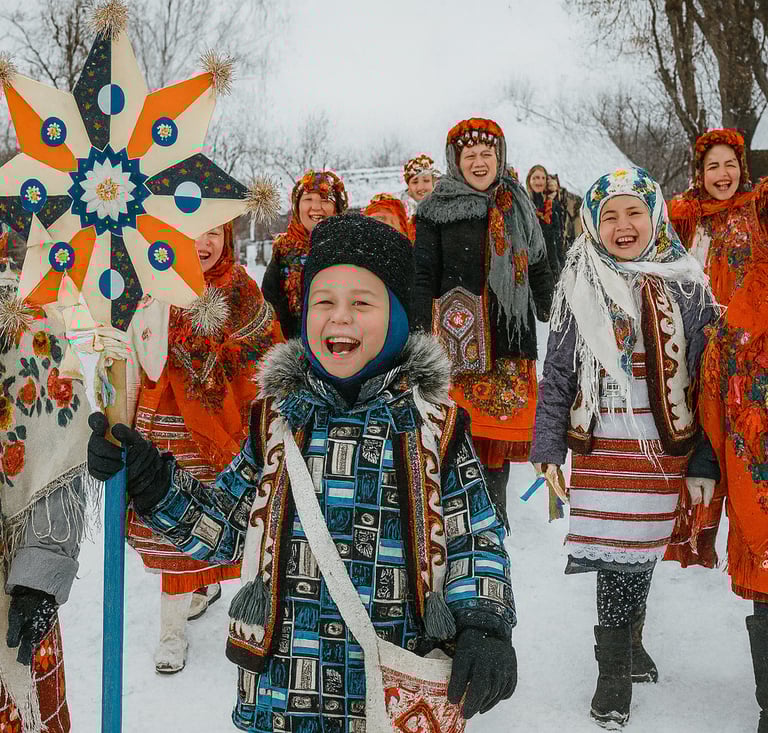
During the Christmas period, groups of carolers visit homes, performing Коля́дки in exchange for gifts or treats. They traditionally carry a decorated зірка (zirka, star) symbolizing the Star of Bethlehem and sometimes a вертеп (vertep, portable nativity scene). The leading singer, or береза (bereza, leader), directs the performance while the rest of the group plays instruments such as the сопілка (sopilka, flute), бубон (bubon, tambourine), and трембіта (trembita, alpine horn). The songs often open with blessings like “Добрий вечір тобі, пане господарю” (Good evening to you, master of the house), followed by wishes for health, happiness, and prosperity in the coming year.
The structure of Коля́дки varies regionally. In Галичина (Halychyna, western Ukraine), they tend to be melodic and choral, emphasizing harmony, while in Полтавщина (Poltava region), they include rhythmic dialogue between soloists and chorus. Some versions narrate biblical scenes, while others celebrate the family’s господар (hospodar, head of household) or the господиня (hospodynia, mistress of the home). In the Карпати (Carpathians), the carolers’ arrival is accompanied by маланка (Malanka, folk New Year masquerade) festivities, blending humor, theater, and dance.
Under Soviet rule, Коля́дки were discouraged as religious relics, yet they persisted in private homes and rural villages. Since independence, they have experienced a renaissance, becoming an emblem of cultural revival and national pride. Schools, choirs, and television broadcasts feature traditional Коля́дки, while modern composers adapt them for orchestral and pop arrangements.
KOROVAI
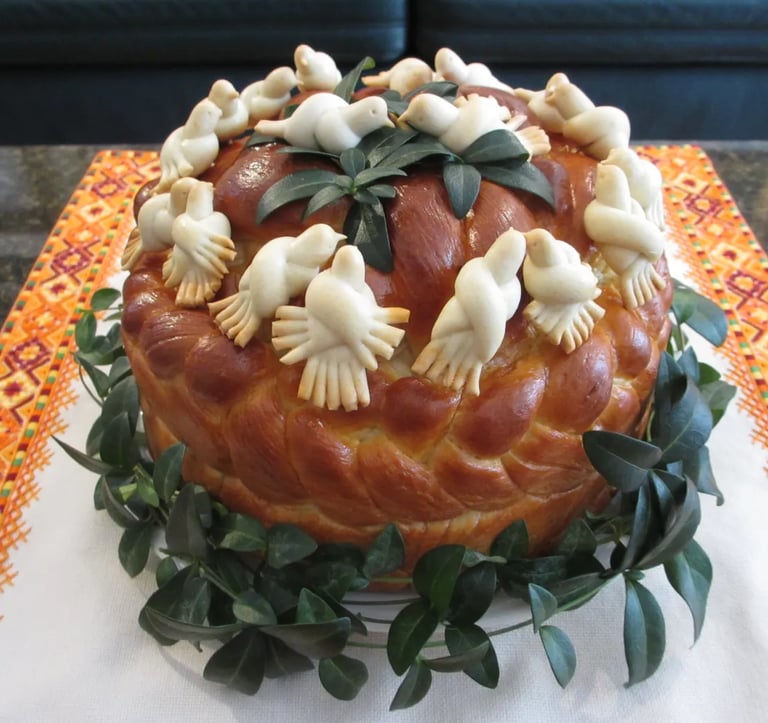
The Коровай (korovai, Ukrainian ritual bread for weddings) is one of the most significant and symbolic elements of Ukrainian ceremonial culture, embodying unity, fertility, and prosperity. Baked and decorated with elaborate ornaments of dough, the Коровай occupies the central place in the весілля (vesillia, wedding) tradition, where it serves not merely as food but as a sacred emblem of the couple’s new life together. The custom of preparing the Коровай dates back to pre-Christian times, when bread was revered as a divine gift from Дажбог (Dazhboh, sun deity) and associated with the fertility of the earth.
The process of making the Коровай follows strict ritual rules. It must be prepared by women known as коровайниці (korovainytsi, bread-baking women), who are typically married and live in harmony—qualities believed to bless the couple’s future. The ingredients—борошно (boroshno, flour), вода (voda, water), сіль (sil, salt), яйця (yaitsia, eggs), and мед (med, honey)—symbolize purity, abundance, and sweetness. While kneading the dough, the women sing весільні пісні (vesilni pisni, wedding songs) invoking joy, fertility, and divine protection. The act of baking becomes a communal ritual expressing goodwill and solidarity.
The decoration of the Коровай is deeply symbolic. It is adorned with figures of голуби (holuby, doves) symbolizing love, барвінок (barvinok, periwinkle) representing eternal youth, and колоски пшениці (kolosky pshenytsi, wheat ears) denoting prosperity. The top is often crowned with a сонце (sontse, sun) or калина (kalyna, viburnum berries), echoing ancient fertility motifs. Regional variations exist: in Полісся (Polissia), the bread is tall and round; in Поділля (Podillia), it is flatter and richly ornamented. Regardless of shape, the Коровай is baked with solemnity, as cracking or burning it is considered an ill omen.
During the wedding, the Коровай is placed at the center of the festive table, covered with an embroidered рушник (rushnyk, ritual towel). The bride and groom circle it three times, after which it is blessed and divided among guests. Each participant receives a piece as a token of happiness and unity. The sharing of the Коровай mirrors the social ideal of collective joy and harmony, linking the individual celebration to the well-being of the entire community.
In modern Ukraine, the Коровай continues to hold cultural and symbolic significance. While contemporary weddings may include Western customs, the ritual bread remains indispensable, reflecting continuity with national traditions.


EXPAND YOUR KNOWLEDGE
If you are serious about learning Ukrainian, we recommend that you download the Complete Ukrainian Master Course.
You will receive all the information available on the website in a convenient portable digital format as well as additional contents: over 15.000 Vocabulary Words and Useful Phrases, in-depth explanations and exercises for all Grammar Rules, exclusive articles with Cultural Insights that you won't find in any other textbook so you can amaze your Ukrainian friends or business partners thanks to your knowledge of their country and history.
With a one-time purchase you will also get 10 hours of Podcasts to Practice your Ukrainian listening skills as well as Dialogues with Exercises to achieve your own Master Certificate.
Start speaking Ukrainian today!
Learn the official language of Ukraine in 30 days thanks to the most complete grammar, vocabulary and culture course available.
Start speaking Ukrainian today!
For requests or suggestions: pr@learnukrainian.org
© 2026 Ukraine
Support Ukraine in its fight for Freedom: